
Introduction: Battery Performance Defines Stylus Usability for Tablets
Many buyers focus only on stylus nib quality and overlook built-in battery performance before purchase. The battery determines daily practicality for note taking, sketching and on-site product demonstrations. Active stylus buyers, both end users and import procurement teams, need standardized power benchmarks. A qualified active stylus should deliver at least 9 continuous working hours from one full battery charge. Charging speed, standby duration and charging methods create key trade-offs for product selection decisions.
What Battery and Charging Specifications Truly Measure on an Active Stylus
Battery specs include mAh rating, charging duration, runtime, auto-sleep rules and charging interface types. You cannot judge a stylus quality by mAh alone, and all power parameters need side-by-side comparison. Charging time records how long a dead stylus needs to reach full capacity via its supported charging cable. Continuous working time tracks usable writing hours while the stylus actively sends touch signals to screens. Auto power-off cuts idle battery drain and prevents energy loss when users forget to turn off the stylus pen. Standby time describes how long a fully charged pen retains power without regular human operation. Active styluses rely on battery power to transmit signals for palm rejection and tilt detection functions.
Compare Type-C, Magnetic Wireless and Hybrid Charging for iPad Stylus Models
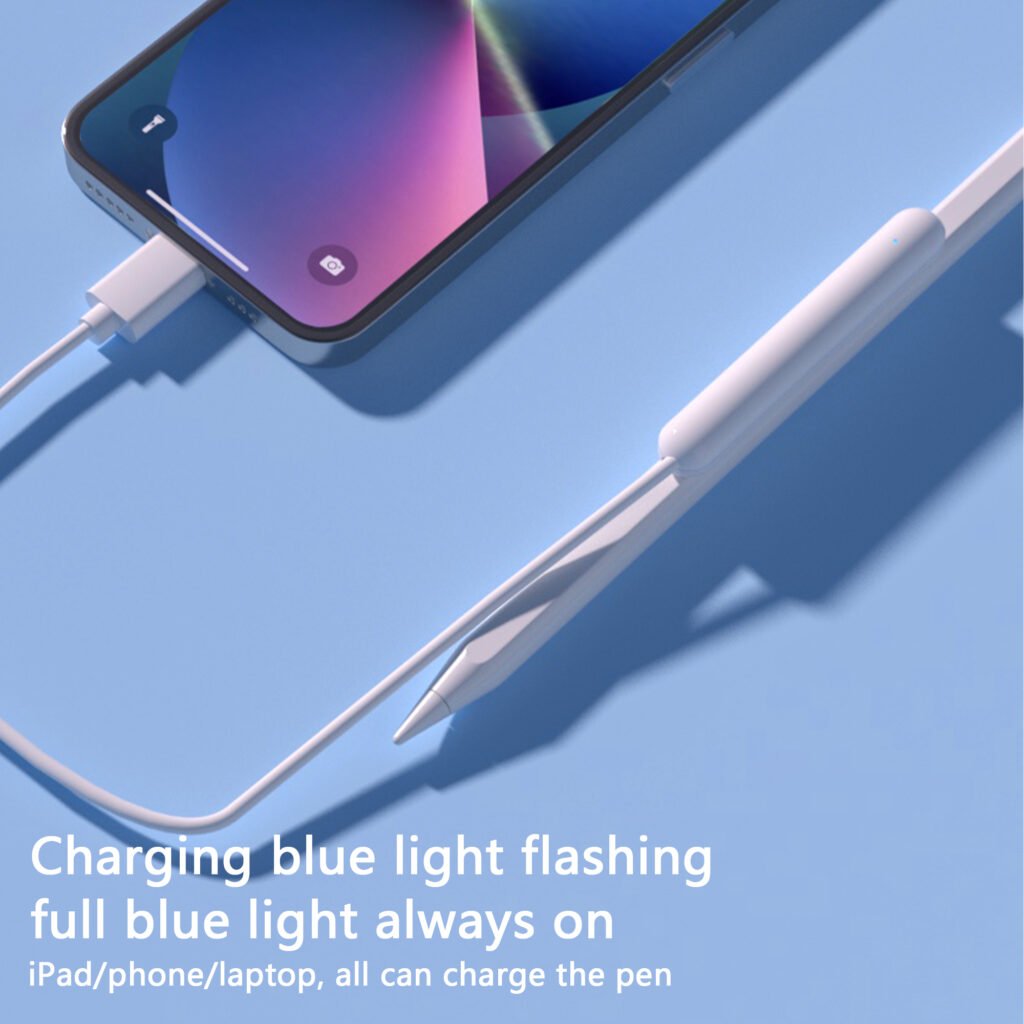
Type-C charging remains the fastest and most universal option across most active stylus product lines. Jiayao Type-C models finish full charging within 25–40 minutes and match common device cable ecosystems. Magnetic wireless charging attaches the pen to iPad side edges but usually needs longer full charging cycles. Hybrid designs with hidden Type-C ports give users both fast wired charging and cable-free wireless convenience. W13-A supports dual charging, finishing cable charge in 15 minutes while wireless charging takes one hour. W3-H uses magnetic-only charging and needs roughly 70 minutes to complete a full battery recharge cycle.
Model Benchmarks: Runtime, Battery Size and Weight Trade-offs for Importers
90mAh batteries fit slim lightweight stylus bodies and support magnetic wireless charging functions. 165mAh aluminum alloy models balance weight, charging speed and 11–16 hours of continuous working time. The E3-A carries a 230mAh battery and reaches up to 44 rated working hours for heavy daily creation tasks. Larger battery cells increase total runtime yet slightly raise stylus weight compared with compact small-battery versions. Automatic power-off timers vary from 10 minutes to 60 minutes across different Jiayao stylus product SKUs. A 10-minute auto shutoff is widely preferred to preserve standby charge inside bags or storage containers.
Importer Checklist: Certifications, MOQ and After-Sales Terms Before Bulk Sourcing
Buyers must verify RoHS and ISO9001 certificates list the exact stylus SKUs included inside purchase orders. Jiayao’s factory holds ISO9001:2015 certification covering capacitive stylus research and development work. The Dongguan manufacturer offers flexible MOQ starting at 500 units and one-year one-to-one product replacement. Procurement teams should request full charging tables, battery datasheets and 100% factory inspection records. OEM and ODM customisation covers logo, casing color, nib selection, packaging and function parameter adjustments. Always confirm sample lead time and mass production shipping timeline before signing large import contracts.
Passive Stylus Alternative: Battery-Free Pens for Simple Tablet Navigation Tasks
Passive styluses contain no battery and work as simple conductive fingertip replacements for touchscreens. These low-cost pens cannot deliver palm rejection, tilt sensing or low-latency precise drawing performance. Passive options suit basic tapping and casual browsing instead of professional note-taking or illustration jobs. This distinction helps importers separate product positioning for different retail customer target groups.
Final Takeaways for Stylus Buyers
Evaluate the full power system rather than only battery capacity when selecting tablet stylus products. Match charging type and runtime to end-user scenarios including student notes, office work and field demos. Check certification scope and factory quality control processes to reduce after-sales risk for imported goods. Reliable suppliers provide transparent spec sheets and stable mass production capacity for global electronics buyers.